Greece
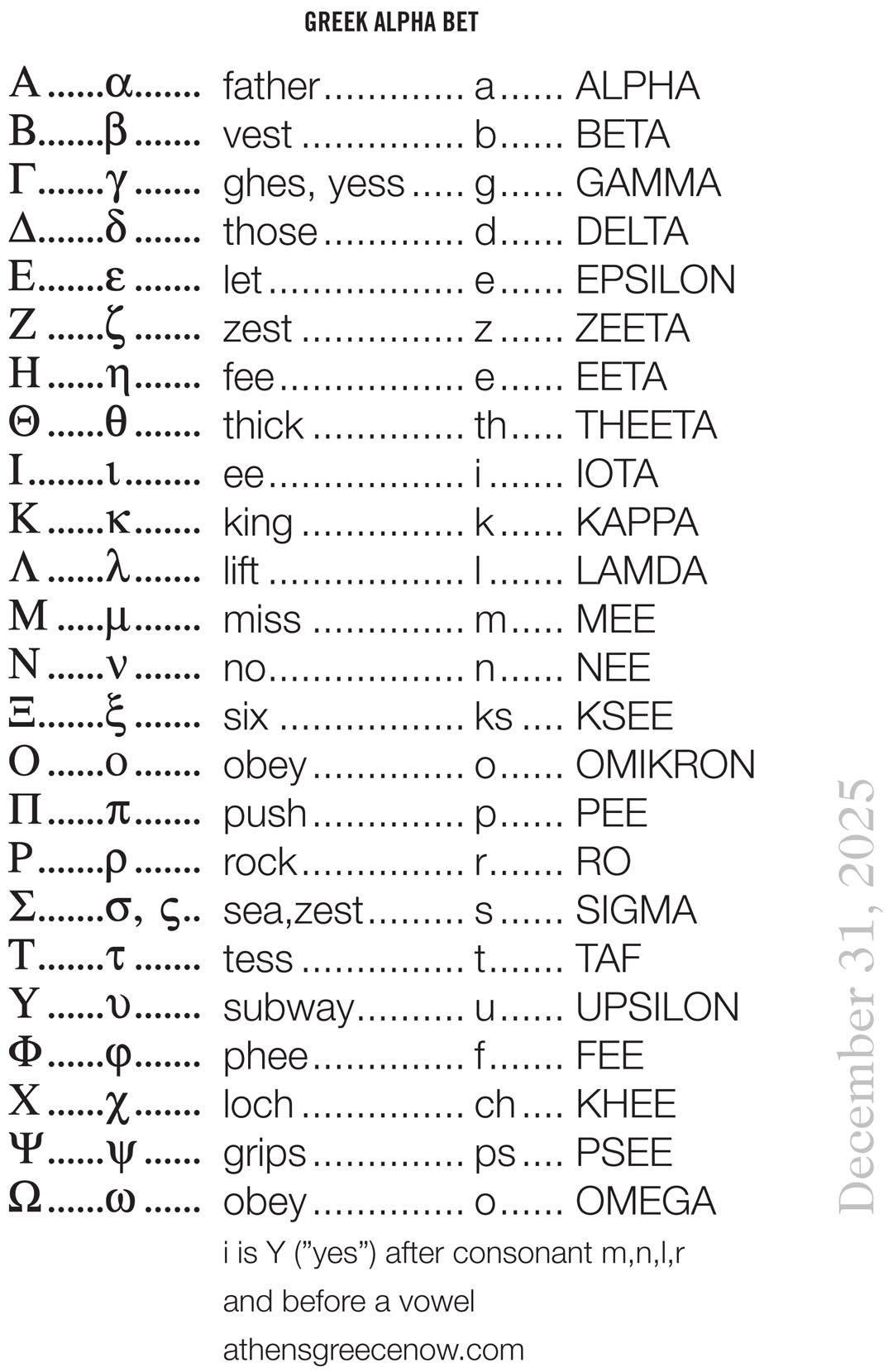
Hellenic Language
Some Modern Greek Slang
Ρε – "Hey, man!" or "Hey, dude!"
Phonetic: reh
Short, quick sound (almost like “ray” without the y)
Often unstressed and clipped
Ρε φίλε! → reh FEE-leh = “Dude!”
Τι κάνεις, ρε; → tee KAH-nees, reh? = “What are you doing, man?”
2. Φίλε / Φίλη – "buddy"
Phonetic:
Φίλε → FEE-leh
Φίλη → FEE-lee
Used exactly like “man,” “dude,” “buddy”.
3. Γαμάει / Γαμάτος – a vulgarism "badd-ass!" or "awesome!"
Vulgar based word but in common use.
Γαμάει → gah-MY-eh = “This is awesome”
Γαμάτος → gah-MAH-toss
Αυτό γαμάει → ahf-TOH gah-MY-eh (“This rocks”)
Γαμάτος τύπος → gah-MAH-toss TEE-pohss (“Awesome guy”)
4. Χαλαρά – "relax"
Phonetic: hah-lah-RAH
The H is a soft, breathy sound (Greek χ)
Stress strongly on the last syllable
Χαλαρά! → “Relax / No worries”
Πάμε χαλαρά → PAH-meh hah-lah-RAH = "let's relax"
5. Σιγά – "easy" or "slow down"
Phonetic: see-GAH
Tone-dependent:
Calm: “easy”
Sarcastic: “yeah right”
Annoyed: “slow down”
Examples:
Σιγά ρε → see-GAH reh = "slow down, man" or "take it easy, dude"
Σιγά το πράγμα → see-GAH toh PRAHG-mah = "so what?" (to dismiss an exaggeration)
GREECE TRAVEL GUIDE FOR SENIORS 2026-2027 – AMAZON 128 Pages
ADVERTISEMENT
Guide Book for the Peloponnese: with Athens, Delphi and Kythira – Paperback – Amazon – Bradt Travel Guides, 288 Pages, November 18, 2025
Basic Greek words and phrases
NO - ochee
YES - neh
HELLO - Yahsass (to a group or formal, respectful greeting to an individual ) or; Yassou (to children or close friends)
THANK YOU - efkhateeSTO / efkhareesto (I've heard it said both ways)
I DO NOT UNDERSTAND - THEN kataloveeno
I DO NOT UNDERSTAND, I ONLY SPEAK ENGLISH - THEN kataloveeno me-loh Mo-nen Angleeka
I AM SORRY - leePOOmeh
MY NAME IS - OonoMAzomeh
I DID NOT ORDER THIS - then toh parEENgeela ahf-TOH
HOW MUCH IS THE ENTRANCE FEE - poso kanee ee EEsodhos
GOOD - KaLO
BAD - KaKO
HOW ARE YOU? - POHSS EESS-theh? (FORMAL GREETING)
HOW ARE YOU? - Ti Kha-nees? (INFORMAL GREETING "what's going?" or "what's happening?")
GOOD MORNING - Kalimera
GOOD AFTERNOON - Kalispera
GOOD EVENING - Kalinikta
Count to Fifty in Greek
One – EH-na
Two – THEE-oh
Three – TREE-uh
Four – TEH-sa-ruh
Five – PEN-deh
Six – EK-see
Seven – EF-tah
Eight – OK-toe
Nine – eh-NAY-uh
Ten – THEK-uh
Eleven – EHN-thekka
Twelve – THO-thekka
Thirteen – thekka-tria
Fourteen – thekka-TES-a-ruh
Fifteen – thekka-penday
Sixteen – thekka-EKsee
Seventeen – thekka-eftah
Eighteen – thekka-OKtoe
Nineteen – thekka-enyah
Twenty – EE-ko-see
Twenty-one – EE-ko-see EH-na
Twenty-two – EE-ko-see THEE-oh
Twenty-three – EE-ko-see TREE-uh
Twenty-four – EE-ko-see TEH-sa-ruh
Twenty-five – EE-ko-see PEN-deh
Twenty-six – EE-ko-see EK-see
Twenty-seven – EE-ko-see EF-tah
Twenty-eight – EE-ko-see OK-toe
Twenty-nine – EE-ko-see eh-NYAH
Thirty – TREE-ahn-tah
Thirty-one – TREE-ahn-tah EH-na
Thirty-two – TREE-ahn-tah THEE-oh
Thirty-three – TREE-ahn-tah TREE-uh
Thirty-four – TREE-ahn-tah TEH-sa-ruh
Thirty-five – TREE-ahn-tah PEN-deh
Thirty-six – TREE-ahn-tah EK-see
Thirty-seven – TREE-ahn-tah EF-tah
Thirty-eight – TREE-ahn-tah OK-toe
Thirty-nine – TREE-ahn-tah eh-NYAH
Forty – SA-rah-da
Forty-one – SA-rah-da EH-na
Forty-two – SA-rah-da THEE-oh
Forty-three – SA-rah-da TREE-uh
Forty-four – SA-rah-da TEH-sa-ruh
Forty-five – SA-rah-da PEN-deh
Forty-six – SA-rah-da EK-see
Forty-seven – SA-rah-da EF-tah
Forty-eight – SA-rah-da OK-toe
Forty-nine – SA-rah-da eh-NYAH
Fifty – PEE-neh-da
Sixty – EK-SEE-neh-da
Seventy – EH-vdo-MEE-da
Eighty – OK-doh-NEE-da
Ninety – EH-neh-NEE-da
One hundred – eh-KAH-toh
Five hundred – pehn-DAH-koh-syah
One thousand – HEEL-yah
Five thousand – PEHN-teh HEEL-yah-des
Ten thousand – DEH-kah HEEL-yah-des
Numbers in conversational Greek:
Greeks would most naturally say €1,500 like this:
Χίλια πεντακόσια ευρώ
Phonetic: HEEL-yah pehn-DAH-koh-syah EV-roh
This is not normal "Street Greek" example: “δεκαπέντε εκατοντάδες” (fifteen hundreds) — sounds unnatural in Greek, an overly formal construction only used in legal/banking contexts.
"Please" and "you're welcome"
Saying "please" - the Greek word "παρακαλώ" (parakalo ="pah-rah-kah-LOH") is a versatile term with several uses in everyday language. It is derived from the verb "παρακαλώ" which literally means "to ask" or "to request".
Here are the primary meanings:
Please: When used to make a polite request, "parakalo" functions like the English "please." For example, "Μπορείτε να με βοηθήσετε, παρακαλώ;" means "Can you help me, please?" ("boh-REE-teh nah meh voh-ee-THEE-seh-teh, pah-rah-kah-LOH")
You're welcome: When responding to thanks, "parakalo" is used like "you're welcome." For instance, if someone says "ευχαριστώ" (thank you = "ef-hah-ree-STOH" though when spoken quickly on the street it will sound like "ef-kah-tee-stoh"), the reply might be "παρακαλώ" (you’re welcome).
Excuse me or Pardon: It can be used to get someone’s attention or to politely interrupt, similar to saying "excuse me."
I beg your pardon: In formal or polite contexts, "parakalo" can be used to express a request for clarification or to repeat something.
"Parakalo" is used as a word to express a polite verbal form for requests, gratitude, or attentiveness.
How the modern Greek language increases child's intelligence
July 2019: Story at Optimisticmommy
Vienna: where Greek first appeared in print - Neo Kosmos
November 15, 2017: Nice primer on Greek history vis-a-vis Vienna and the impact of relations via the Ottoman Empire, and afterward:
"After the Treaty of Passarowitz was signed in 1717, the borders stabilised and there was a push to reopen commerce and to begin the reconstruction of a vast area devastated by decades of war. Aside from fixing the boundaries between the two empires, a key provision was the right of Ottoman and Austrian subjects to engage in commerce in each other's realms. The Austrians lacked knowledge of the Ottoman Empire, and the Turks disdained commerce, so as a practical matter the opportunity fell on Ottoman minorities, Orthodox Greeks and Serbs, as well as Jews and Armenians."
A Greek-English Lexicon (1883) - 1901 Edition
Free download of the classic Greek and English Lexicon by George Henry Liddle
What is Greeklish?
Greeklish, a blending of words from Greek and English. Also called Grenglish, Latinoellinika, ASCII Greek. Greeklish can be the Greek language written out using a Latin alphabet.
Weapons, Warriors and Battles of Ancient Greece and Rome - 400 Pages – AMAZON
A comprehensive, accessible study of Greek, Macedonian, and Roman weapons, armour, and military systems. Publisher: Pen and Sword Military
You will see Amazon links on this web site because I am an Amazon affiliate. I earn from qualifying purchases.
GREECE TRAVEL GUIDE FOR SENIORS 2026-2027 – AMAZON 128 Pages
Amazon Greek Language Books
Living Language Greek, Complete Edition – Beginner through advanced course, including 3 coursebooks, 9 audio CDs, and free online learning - Greek, Complete Edition is a unique multimedia course that takes you from a beginner to an advanced level in one convenient package. 
Greek: An Intensive Course, 2nd Revised Edition Fordham University Press; – The first edition of this extremely popular two volume Greek text has been successfully adopted in many high schools and colleges; the organization and approach used by the authors, make it an equally effective tool for those who would enjoy learning the language on their own.
Learn to Read Greek in 5 Days – Learn to Read Greek in 5 Days teaches each letter of the Greek alphabet in a systematic way while providing enough practice along the way to ensure the student learns the entire alphabet.


Greece's Golden Visa program